

Relationship-Based Investment Scams
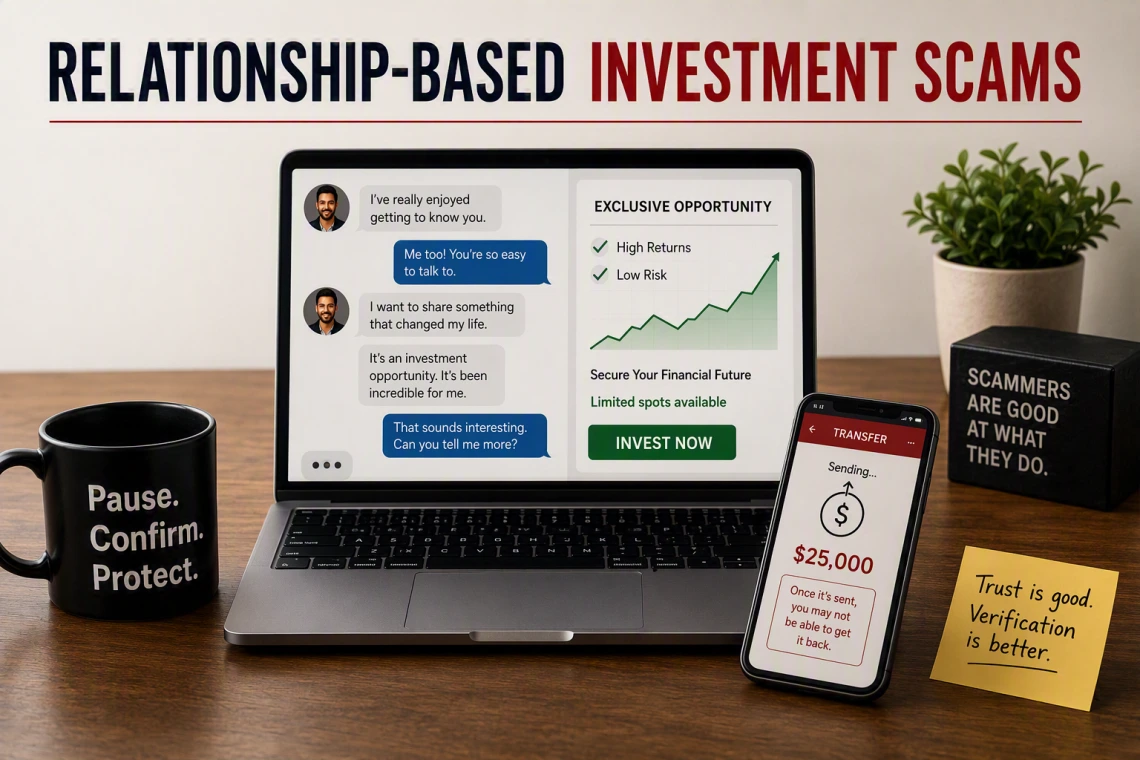
Relationship-based investment scams occur when criminals build trust through social media, dating apps, messaging platforms, or even unexpected text messages before convincing victims to invest in fraudulent opportunities, often involving cryptocurrency. The scammer may pose as a friend, romantic interest, or successful investor.
How the Scam Works
- Connect: A scammer contacts you online or through an email or text message.
- Build Trust: They spend time developing a friendship or romantic relationship.
- Introduce Investing: They recommend a "can't miss" investment opportunity.
- Show Fake Profits: Fraudulent websites or apps display impressive returns.
- Steal Your Money: When you try to withdraw funds, you're asked to pay additional fees or taxes, and eventually lose access to your money.
Warning Signs
- Someone you met online quickly becomes emotionally invested.
- They claim to be an investment or cryptocurrency expert.
- They encourage you to use a specific investment platform.
- They won't meet in person.
- They promise high returns with little risk.
- They pressure you to invest quickly or send more money.
The following is a recent example of a relationship-based scam received by a university faculty member and illustrates the sophisticated tactics attackers use to establish trust before attempting financial fraud:
Dear Professor,
I came across your University of Arizona profile and was struck by the combination of your work in general {medical specialty] with your leadership of [name of university program]. Your view that a trusting relationship is the foundation of medical practice made me think that continuity is more than a training format - it may be how young physicians learn to understand families and communities over time.
My nephew is currently in Grade 12 and has become interested in pediatrics. I work in education, but I am outside medicine.
If convenient, could you share a few thoughts on what he should begin practicing now, beyond science, to become someone patients and families can generally trust?
Protect Yourself: Pause • Confirm • Protect
- Pause: Pause before acting on investment advice from someone you've only met online. Be cautious of guaranteed returns and high-pressure tactics.
- Confirm: Research investment opportunities independently and consult a trusted friend, family member, or financial professional before sending money.
- Protect: Keep your financial information private, avoid unverified investment platforms, and report suspicious activity promptly.
If You've Been Scammed
- Stop sending money immediately.
- Report the scam to:
- FBI Internet Crime Complaint Center (IC3): https://www.ic3.gov
- Federal Trade Commission (FTC): https://reportfraud.ftc.gov
- Local law enforcement
- Contact your bank, credit card company, or cryptocurrency exchange to report the fraud.
- Save evidence, including messages, screenshots, and transaction records.
- Change passwords and enable multifactor authentication if personal information was shared.
Report The Scam
Please report suspicious emails by forwarding them as an attachment to phish@arizona.edu. Stay alert and informed about the latest university-reported phishing scams by visiting the Information Security Office website and the Phishing Alerts webpage.
Article Sources
- FBI Internet Crime Complaint Center (IC3)
- FTC Fraud Reporting
- FBI Cryptocurrency Investment Fraud
- CFTC Relationship Investment Scam Alert
- FINRA Relationship Investment Scams
The ISO website has additional resources on these topics.